


Previously in Barbie Land: adults in kids’ movies, empowerment without power, patriarchy without men, and reading like a Straussian.
Fish Without a Bicycle
The year is 2025, and women are having more sex with ROBOTS than men. And why wouldn’t they? Throughout human history, women have needed men for resources and for protection. In 2025, that is no longer the case: young women are more educated and are out-earning young men in many cities, while both sexes have learned to rely on the state for protection from strangers.
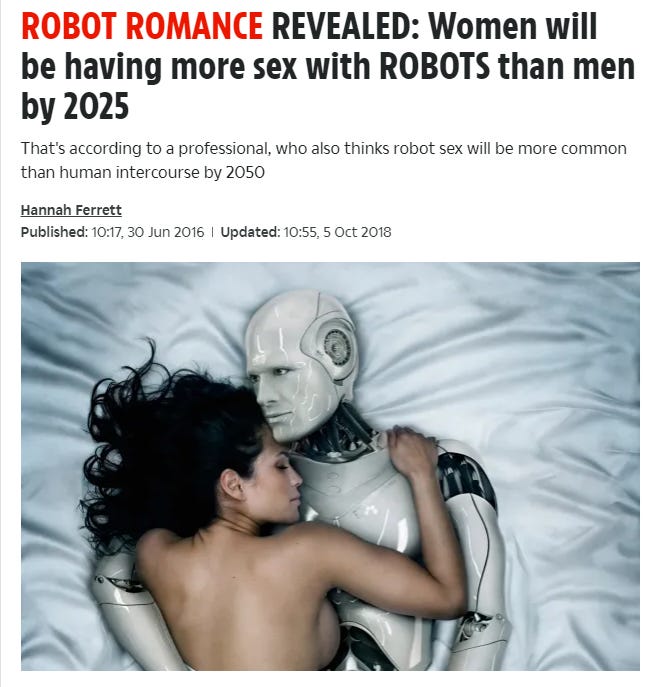
So: what does a woman need men for in 2025?
Though released all the way back in the carbon-sexual days of 2023, Barbie is prescient in exploring this urgent question. The rate of stranger violence in Barbie Land is 0%, while the female wage gap is negative 1,000%. When Ken offers to be Barbie’s boyfriend, she’s incredulous: what do I need a boyfriend for?

This question causes a lot of unease on the online political right, among immature men who dismiss Barbie as woke propaganda for even asking it. They insist that women providing for themselves is bad actually because of some mumble about feminist brainwashing, declining birth rates, and an assessment of 1950s housewife happiness that’s based primarily on vintage butter commercials. And they’ll insist that women still need a man’s protection — from the state as much as from male strangers.
Women, including those on the right, are rightly skeptical:
The bet most women make, politically is: I’ll take my chances with the faceless machine who doesn't care enough to hurt me in particular.
Does it provide sufficient protection? No, but its dangers are diffuse and don't target them on a personal level. They can carve out an existence around its flaws, there are paths to exit in an egalitarian system. The reality is that the most dangerous place for a woman is still the home. This isn’t some paranoid fantasy, the threat of private violence is larger for women than the threat of public violence.
Barbie is a movie about the systems women create to protect themselves from violence, and also about the journey from childhood to adulthood. And in a subtle way, it offers an optimistic answer to the conundrum. Even in a land with no genitals, a woman needs a man for the same reason a man needs a woman — to become a fully-fledged, liberated human.
A Short Skirt and a Longhouse
There’s a glaring contradiction at the heart of Barbie’s plot that we noticed in part 1. For a movie about “patriarchy”, there is the glaring lack of even a single adult man with any power. Gloria’s monologue blames the patriarchy for all the contradictory demands women face: to be thin but not too thin, in charge but not bossy, etc. Yet — none of the Barbies are subject to any of these. There’s a fat Barbie and a bossy Barbie and a meek Barbie and all are equally welcome in Ken Land as in Barbie Land.
The Barbies are subject to a stringent code of behavior, but one that’s completely different from Gloria’s:
No flat feet
No cellulite
No feeling embarrassed
No quitting your day job
Barbie must compliment every Barbie on her appearance
Barbie must laugh along whenever any Barbie laughs for any reason
Barbie must never contemplate change or growth, let alone death
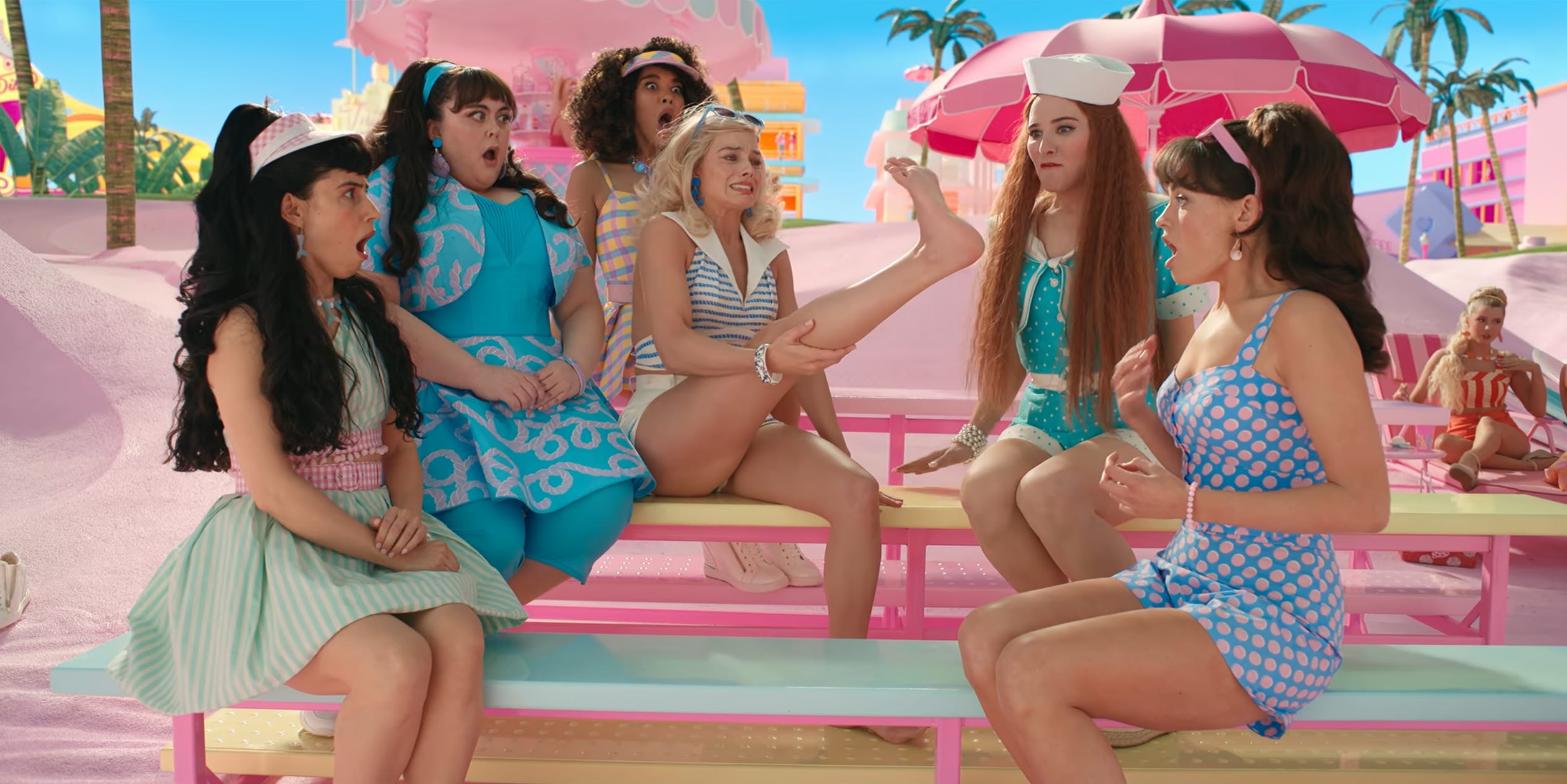
These rules are enforced collectively. When a Barbie breaks protocol, all other Barbies make the same disgusted gasp in perfect unison. It’s a horizontal policing system such that NKVD or Stasi could only dream of. The colloquial term for such a system, derived from the communal dwellings of primitive tribes but applied primarily to post-industrial society, is the longhouse.
The longhouse is often described as a culture, one whose cardinal values are equality, surveillance, and safetyism. Barbie Land is the platonic ideal: a panopticon of transparent houses, a safe space where no one dominates and where nothing ever happens.
Fundamentally, the longhouse is a political regime. That is: a system for enforcing collective power over the individual. It is not an autocracy ruled by a queen; Barbie Land’s own president does no actual presiding. The longhouse is the rule of female norms enforced collectively by all women.
The longhouse regime can operate at different scales, from the international (#MeToo) to the parochial (a clique of schoolgirls warning each other to “steer clear of that guy”). Like any regime, it requires a political formula — a story that justifies the regime’s power over those who are subject to it. The political formula of the longhouse is: it protects us from male violence.
This is the political formula of Barbie Land as well. This may seem incongruent for a place that has neither males nor violence, but we see hints of it in the Barbies’ reactions to men.
When Barbie first arrives in the real world, she gets catcalled: damn, you’re hot! and nice leotard! Wait, how does Barbie know what “catcalling” is? Superficial compliments on one’s outfit are how Barbies talk to each other all the time. Why does Barbie sense “an undertone of violence” on a peaceful skate through Venice Beach?
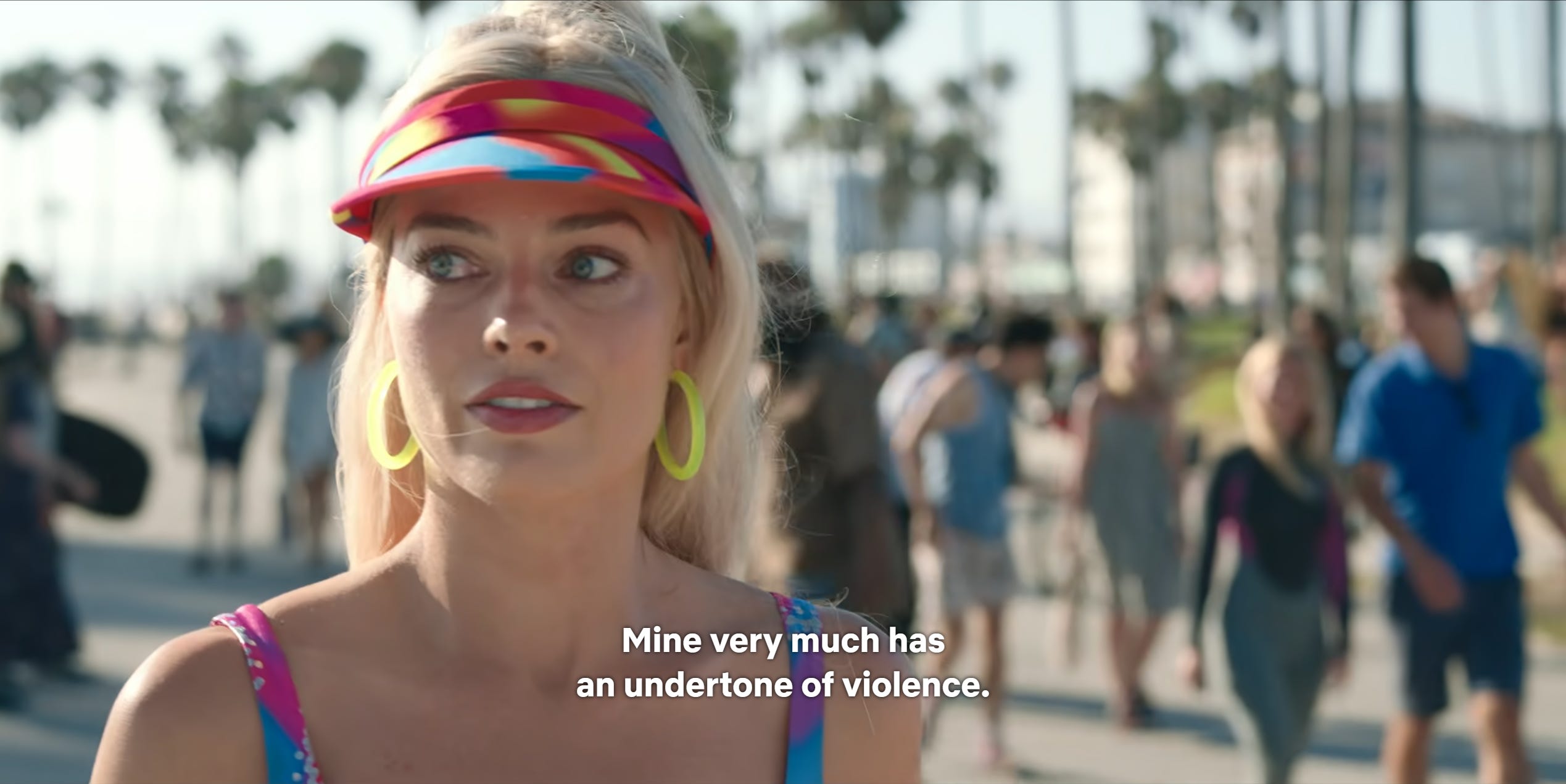
The longhouse imparts the implicit belief that male sexual attention = violence. Barbie has absorbed this despite never witnessing either side of the equation.
The crucial rule for Barbie Land’s subjects is:
No fraternizing with Ken after sundown
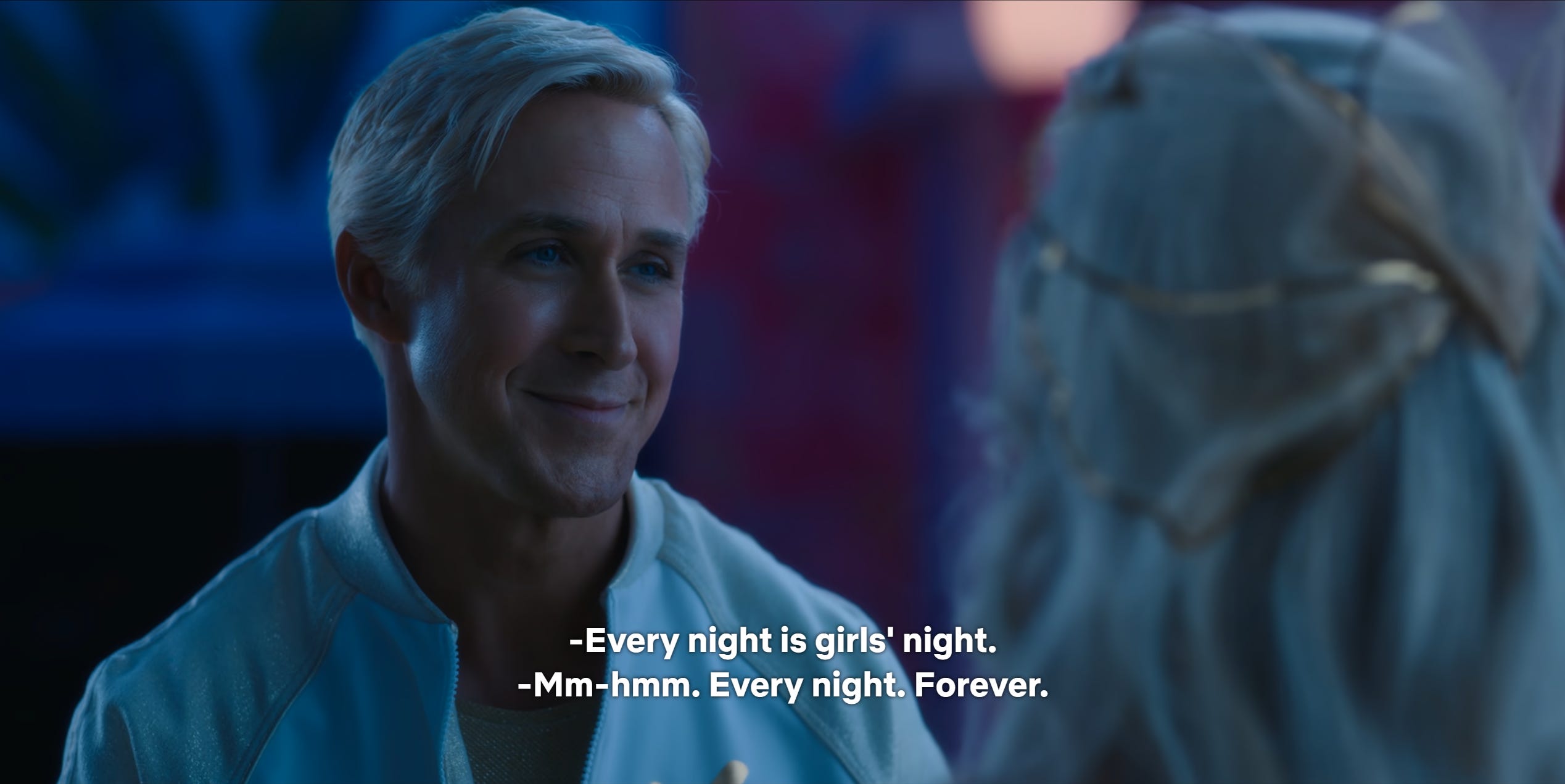
Ken is never a threat to Barbie. He’s utterly incapable of violence even after he learns about “the patriarchy” and gets weirdly enthusiastic about horses. Male attention is a threat to the regime. In the Soviet Union, every day is workers’ day. In Soviet Barbie Land, every night is girls’ night.
Forever.
On Twitter (a male-normed space ruled by a male emperor), guys talk about the longhouse as a way for women to control men. They are missing the point. The longhouse is concerned first and foremost with controlling women. Only once all women are subjugated and strictly policed can the longhouse begin to exert any power over men — by withholding their access to women. Even then, the longhouse prefers men to be marginalized, not integrated. Even an obedient man is a threat to lure a woman away from the longhouse’s sway.
In the last post, we glossed over a key mystery: why do the Barbies immediately capitulate to Ken’s “patriarchy”? He doesn’t threaten or lie or coerce them — he doesn’t need to (and almost certainly couldn’t). Yes, the Barbies get to take a break from their jobs. But these jobs don’t really demand much work of the Barbies, they’re not burned out by long days in the office.

What the Mojo Dojo Casa House offers the Barbies is freedom from the tyranny of the longhouse. From the constant surveillance and social punishment they are forced to subject each other to. From the cognitive dissonance of chirping “we’re in charge!” while being utterly powerless to change anything about their lives.
Being children, the Barbies don’t really know what to do with this newfound freedom — they just play along with the Kens by default — but they feel immediate joy in their liberation. The longhouse can be subtle, but it rules with an iron grip.
Barbie’s Journey
The Barbies’ liberation is short-lived. Gloria kidnaps them one by one into a van and herds them back into the longhouse. And anyway: this was a child’s idea of freedom, an eternal beach day with no responsibilities. Barbie is a satire of corporate feminism and a critique of the longhouse, but at its core it is a coming-of-age movie. Coming of age means letting go of childish fantasies. Escape from the longhouse is a difficult journey of self-emancipation, it takes more than putting a beer fridge in the living room.
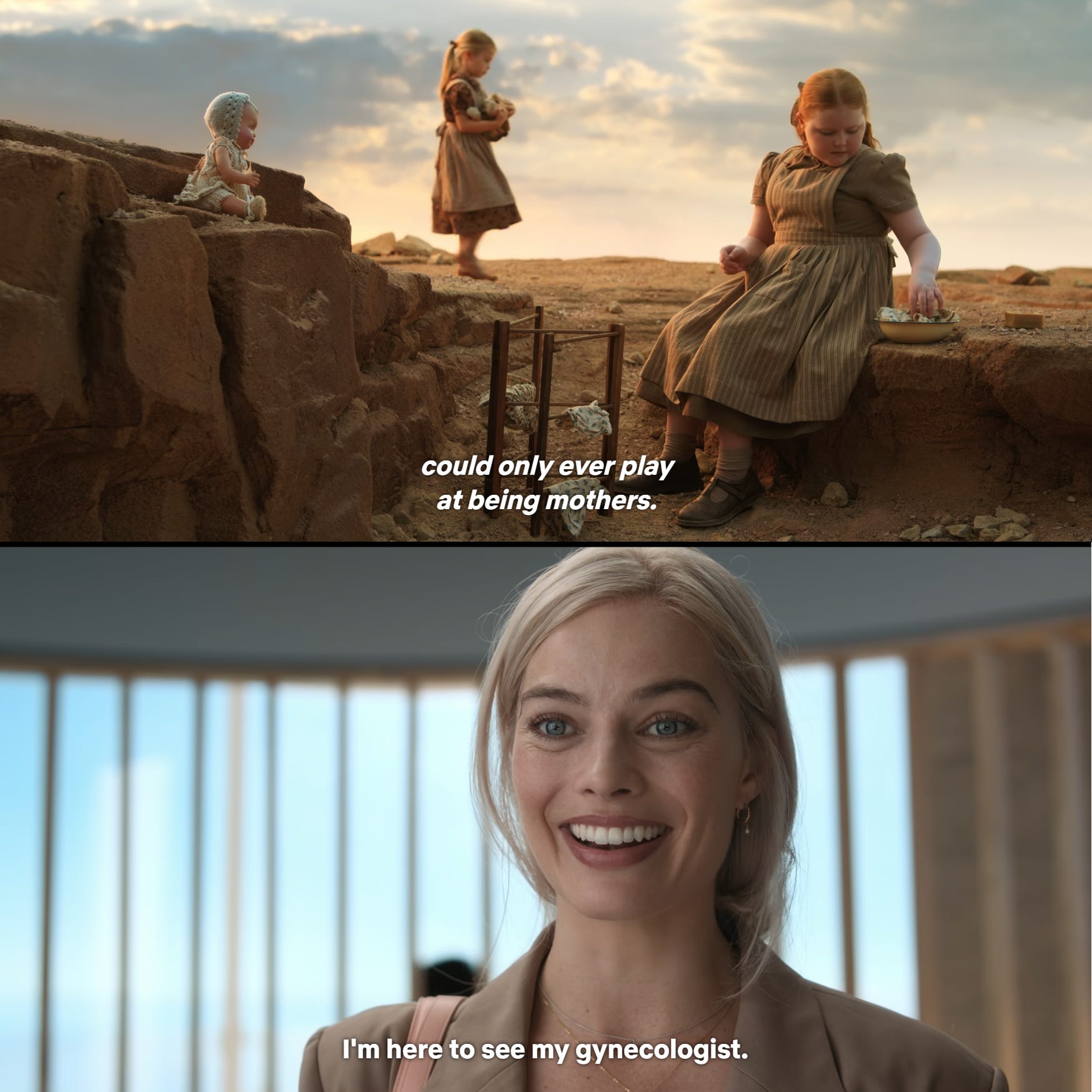
There is one obvious difference between a young girl and a woman who has come of age: reproductive maturity. Barbie opens with a scene of young girls, inspired by a freshly-minted Barbie, rebelling against “playing mother”. A running gag throughout is everyone being scared of the pregnant Midge, reproductive biology being too bewildering for children to contemplate. The movie ends with Barbie herself embracing her newly-developed anatomy, a physical manifestation of her transformation from child to adult.
In Painting Over the Female, we discussed biological femaleness as a source of both terror and power. Specifically, power that a woman can wield that is independent of the symbolic order and the approval of society. A movie about dolls that lack genitalia, Barbie understandably leaves femaleness in the background and only hints at it.
Instead, it focuses on the psychological journey to adulthood, told in the archetypal narrative pattern of a hero’s journey.
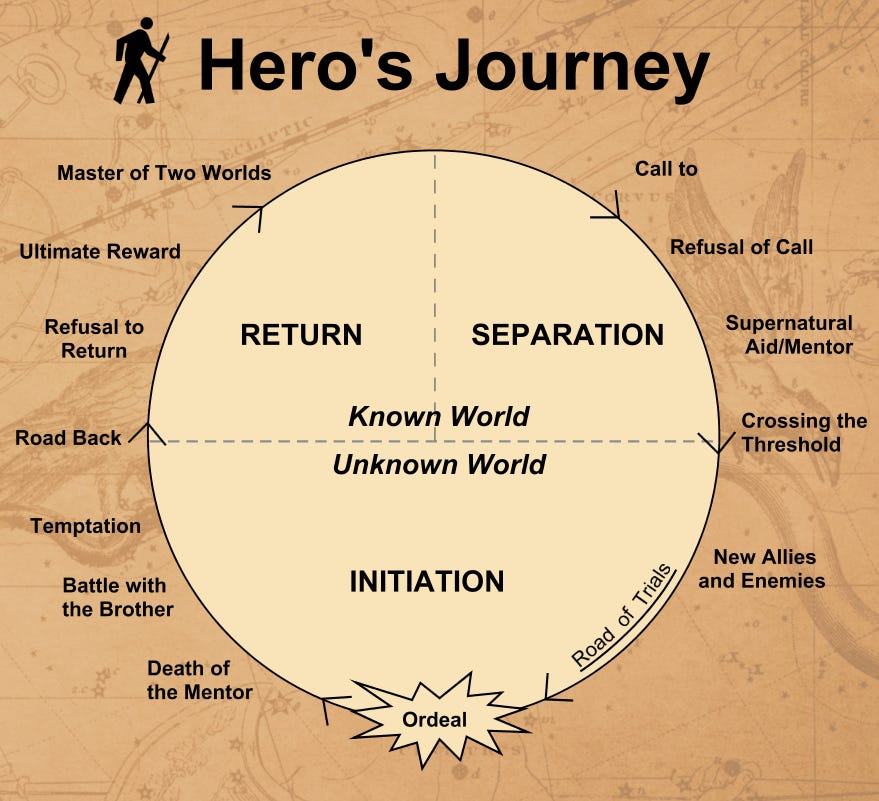
Let’s fill in the dramatis personae. The heroine is right there in the movie’s title. The known world is Barbie Longhouse. The unknown world is a place of profound danger and transformative knowledge: Los Angeles. Who is Barbie’s supernatural mentor?
It’s certainly not Gloria, who is herself a child who requires parenting. And it can’t be Ruth Handler, whom Barbie only meets once her journey is almost complete. It’s the person who literally explains the “real world” to Stereotypical Barbie and calls her over the threshold, a call that Barbie duly refuses before being convinced. Weird Barbie plays the mentor role by the numbers.
The plot of Barbie isn’t about “ripping portals between worlds”, it’s about adult womanhood. That is the actual wisdom that Weird Barbie tries to impart to her protégé, wisdom that Stereotypical Barbie can’t understand at first.
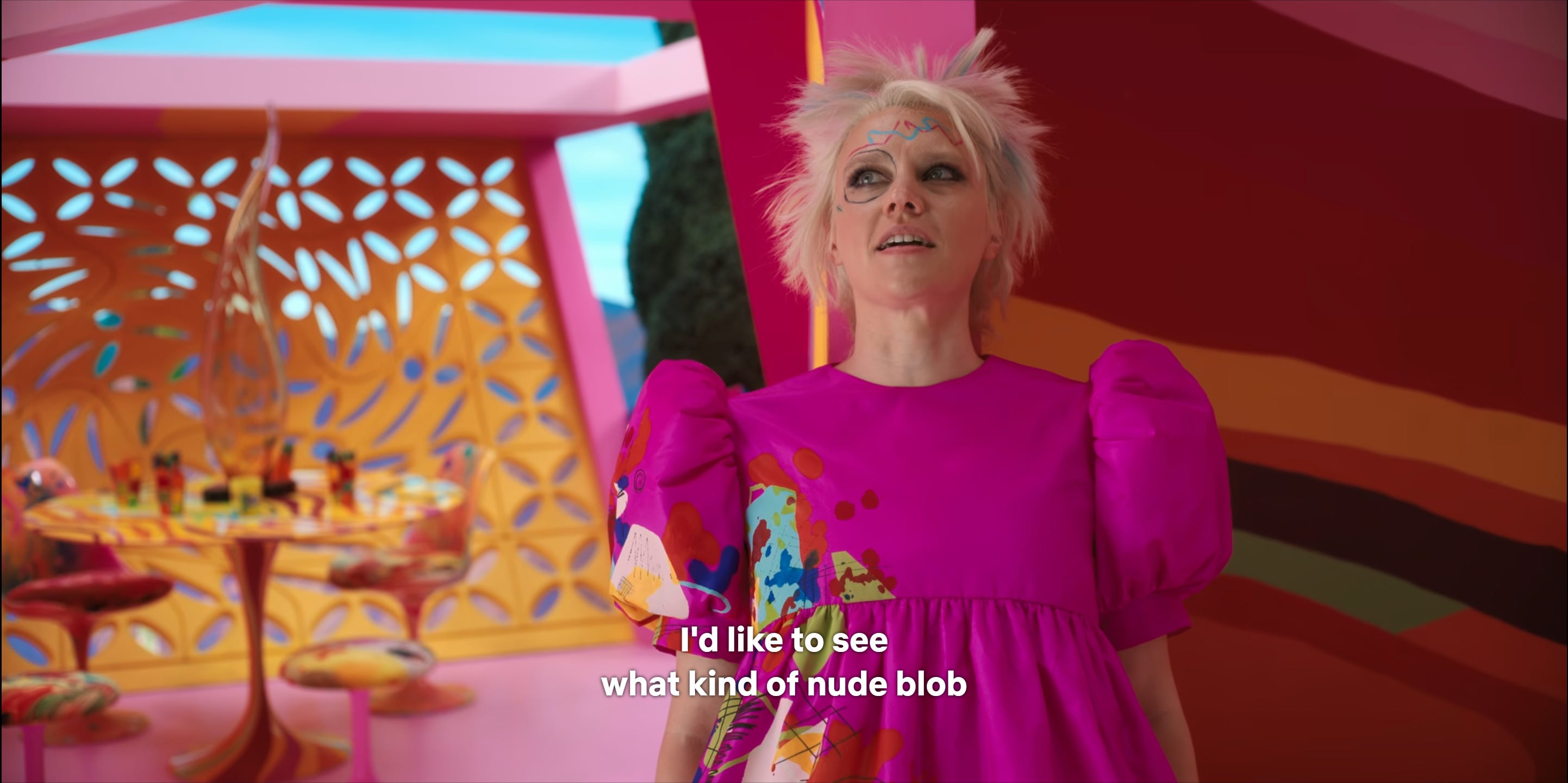
Weird Barbie is the only character in the movie who is openly horny. Weird Barbie isn’t afraid of men. Weird Barbie isn’t bothered by social criticism — being called “weird” behind her back and also to her face — and doesn’t let it change how she acts. Weird Barbie lives in her own secluded house, above and apart from Barbie Land. She shows Stereotypical Barbie not just the way to Los Angeles, but the way out of the longhouse.
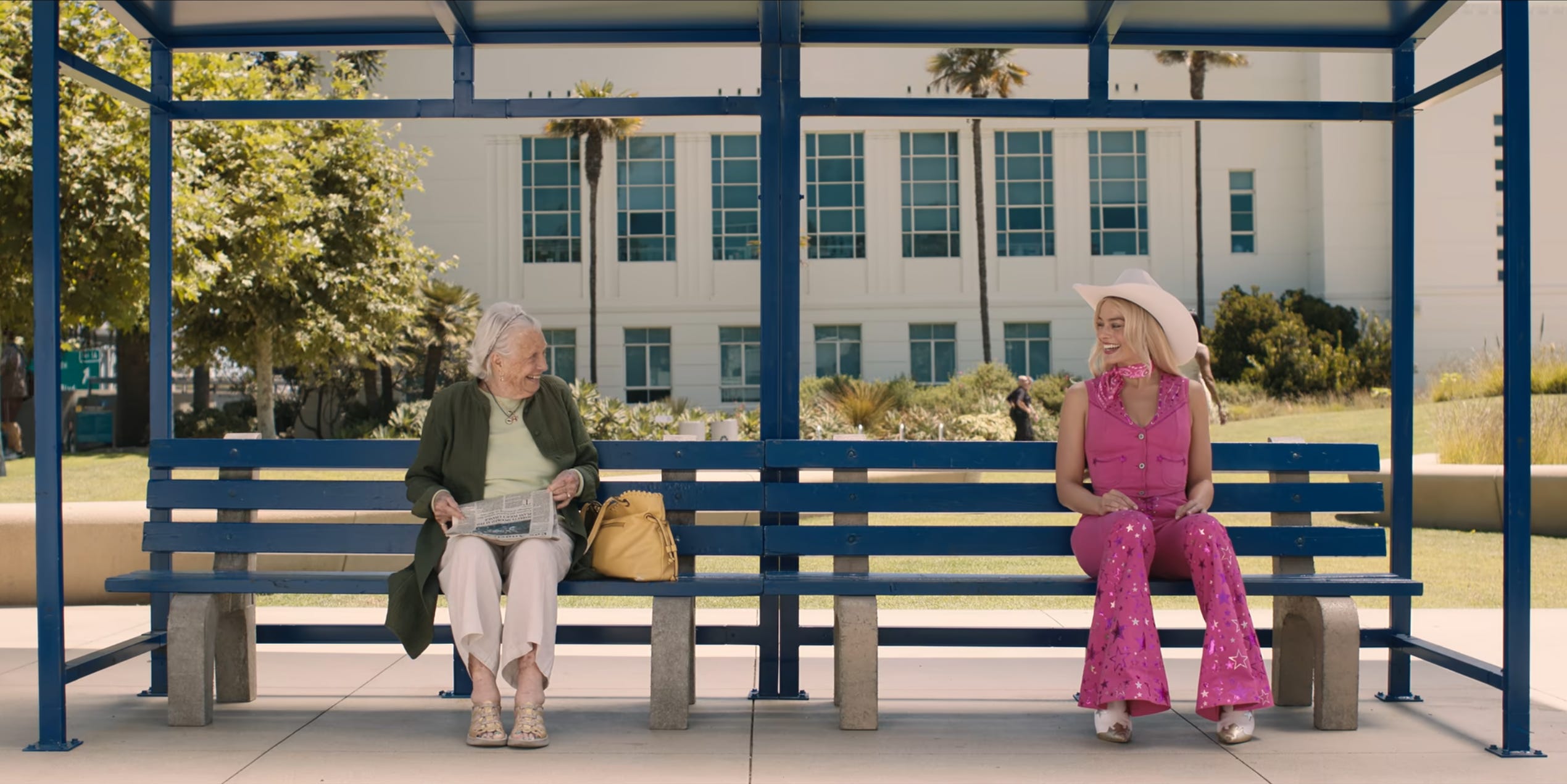
Barbie’s road out of the longhouse is fraught with peril and temptation. The whistling construction workers, the “patriarchy” of men having jobs, Sasha accusing her of promoting “sexualized capitalism”. She also finds inspiration: an old woman who doesn’t need to be told that she’s beautiful to know it.
But Barbie isn’t ready yet for self-liberation. She must face the “battle with the brother” — a confrontation with her own shadow, incarnated in a peer who has succumbed to the temptation of the dark path. This is Gloria’s role in the story.
After the Barbies have been “unbrainwashed”, they are entirely under Gloria’s thrall. She devises a plan: the Barbies would pretend to accept the Kens’ romantic overtures, but then break their little boy hearts in sudden reversal and turn the Kens against each other in a frenzy of rivalrous violence.
Barbie, having acquired more than a little wisdom by this point, is reluctant to go along. She points out that Gloria’s scheme is unnecessarily cruel and obviously evil. Gloria drops the mask and tells Barbie the real reason political dissidents must be ostentatiously punished: the regime cannot tolerate threats to the regime.
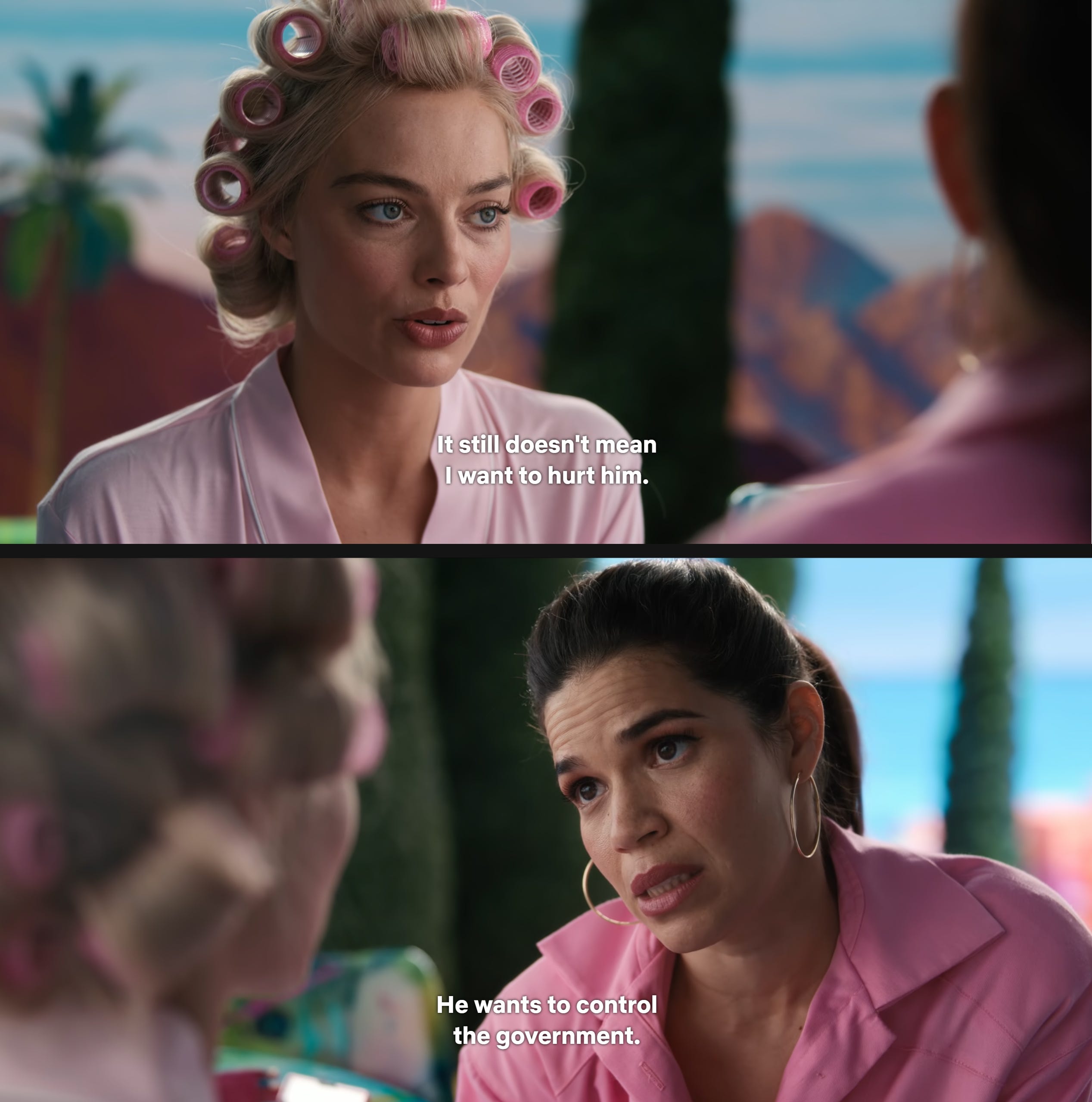
By this point in the movie, there is no longer any actual threat to the “constitutional republic” of Barbie Land. The constitutional election is still pending but in Barbie Land, as in every girl’s toybox, Barbies vastly outnumber Kens. They can simply outvote them without jeopardizing democratic legitimacy with blatant voter suppression.
The regime that is threatened is not the republic but the longhouse, the order that every man be treated with fear and suspicion by every woman. Borrowing from the classic totalitarian’s playbook, Gloria needs every Barbie to participate in the collective punishment of Kens to restore the longhouse.
But then, just as Barbie’s would-be ally turns to villainy, her would-be adversaries turn to redemption.
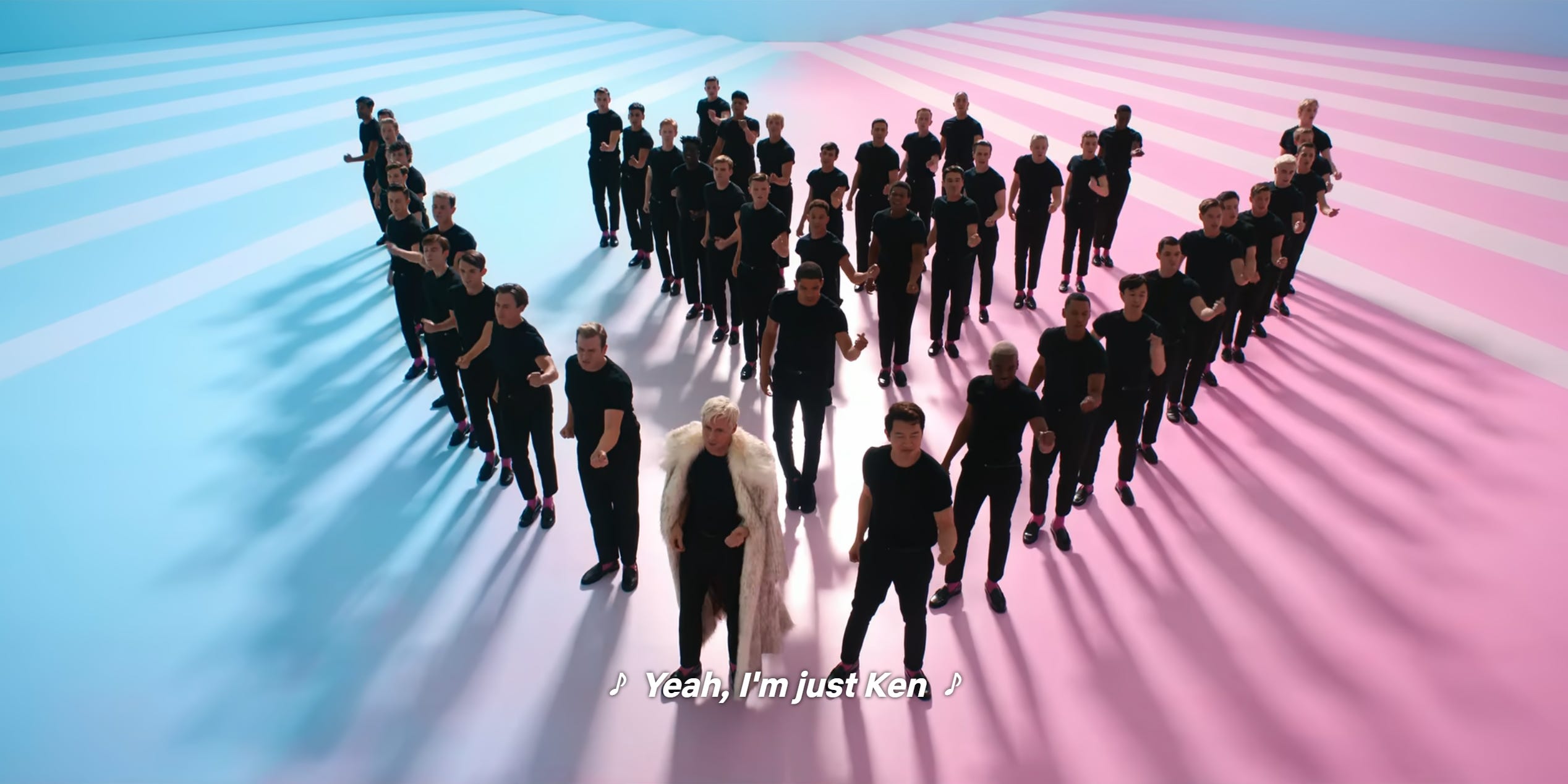
The Kens overcome their aggressive impulses and refuse to war on each other. They find assurance in being “just Ken”, a source of joy and strength that doesn’t depend on the vagaries of the Barbies’ attention. The longhouse paints men as jealous and violent, compulsively hunting women as trophies to display in their competition with other men. In the moment of truth, the Kens reveal themselves to be the exact opposite.
The longhouse is dispelled with these magic words: bros before hoes.
The Kens have newfound self-worth, but they have lost the election, their houses, and their girlfriends. The Barbies gather to jeer at them from the balconies before banishing the unwashed Kens back to the margins of society.
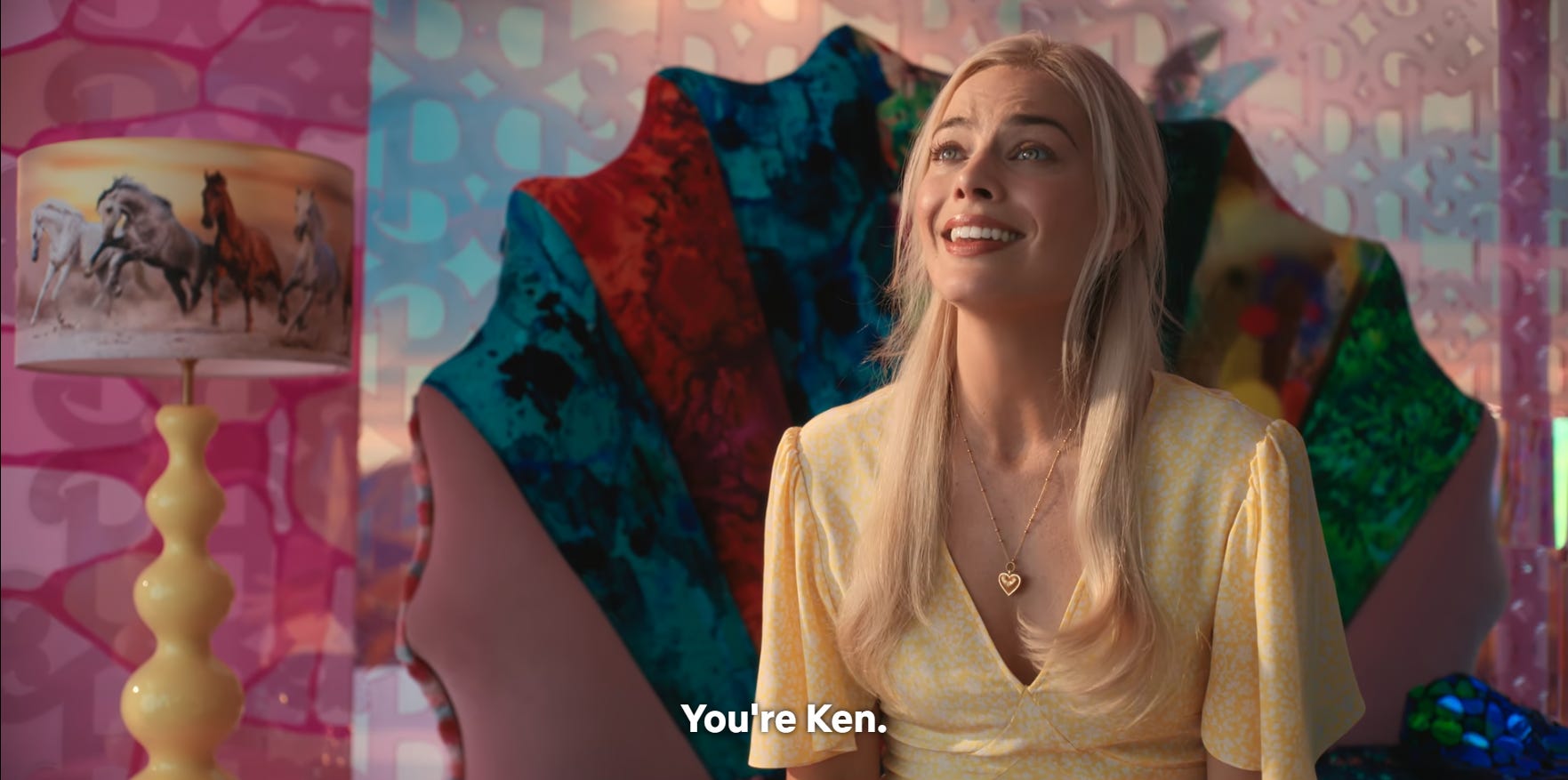
It is then that Barbie completes her journey. Instead of joining in the mockery, she goes up to comfort a wounded Ken and set him on his own journey to adulthood. This scene also reveals the greatness of Margot Robbie’s performance as Barbie: she drops the dollish stiffness and childish mannerisms that she maintained throughout and emanates a human, powerful beauty.
The hero only becomes a hero at the end of the journey, when they achieve “mastery of two worlds”. In the last scene, Barbie is shown wearing pale pink Birkenstocks, a harmonious fusion of the Barbie Land heels and the sandals of real world adulthood.
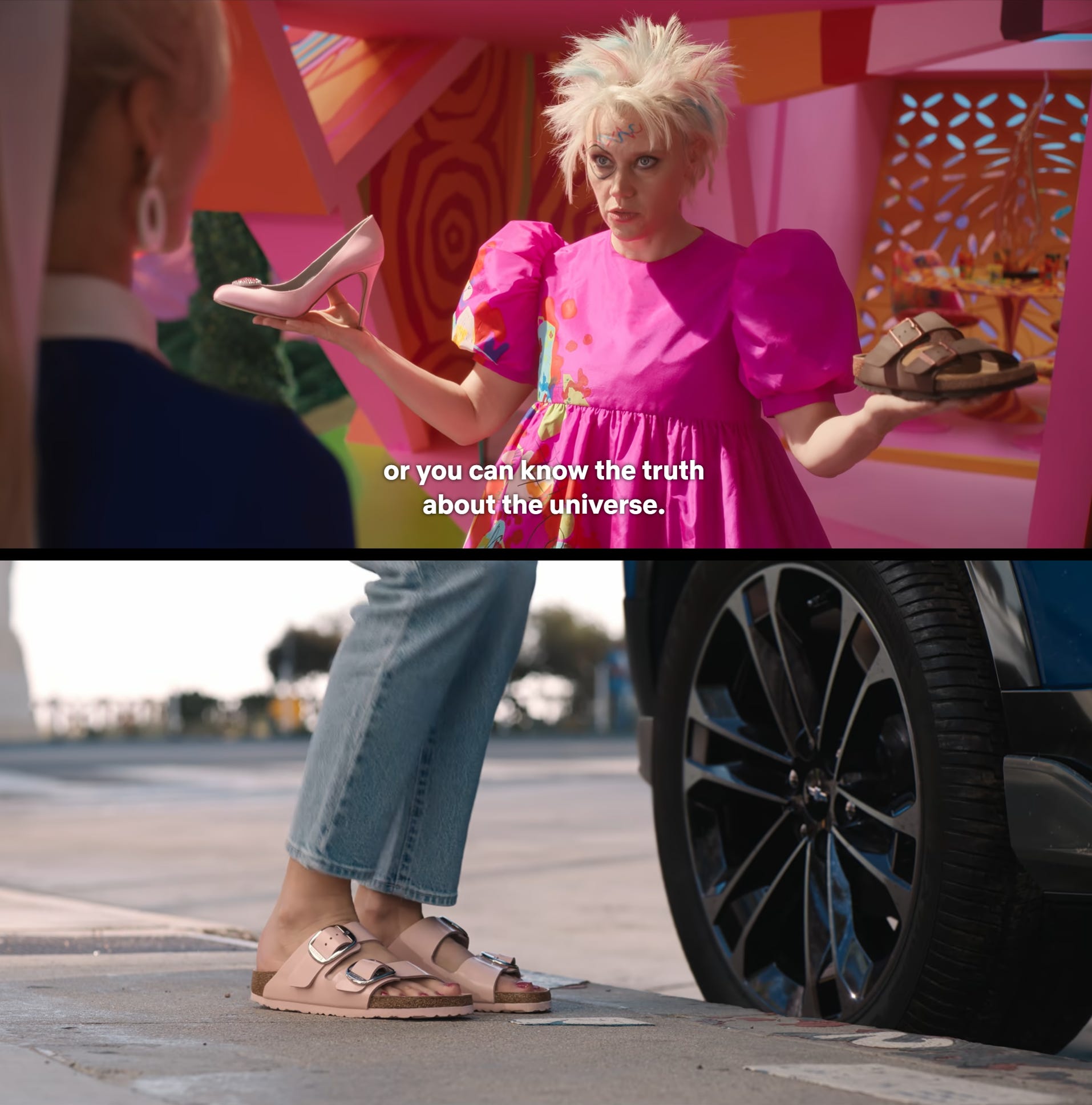
The mastery of being a woman lies is embracing the contradictions in Gloria’s monologue not as a burden but as freedom. A woman is free to be childish at times and also help children when they need her. She can be a boss or a beer maiden. She can protect the sisterhood, but she can also choose to walk out of the longhouse and into the world of men.
I've never watched barbie but I've read some Discourse. It's pretty interesting to me that until now I didn't know there was a Weird Barbie